Personal Safety as Essential Health and Wellness Component
Why Personal Safety Matters for Employee Wellbeing
Personal safety is a fundamental component of health and wellness, just as essential as physical fitness and general wellbeing. Organizations that prioritize employee health must recognize that safety education significantly impacts both personal and professional life quality, employee satisfaction, and overall workplace productivity.
The Psychological Impact of Fear and Insecurity
The effects of fear of crime, especially fear of violent victimization, on an individual's outlook and attitude toward life can be profound and far-reaching. This fear affects:
- Personal life quality - Reduced enjoyment of activities, restricted movement, heightened anxiety
- Professional performance - Decreased focus, productivity challenges, workplace stress
- Mental health - Chronic anxiety, hypervigilance, sleep disturbances
- Physical health - Stress-related conditions, compromised immune function
- Social relationships - Isolation, trust issues, reduced engagement
The Danger of Uninformed Fear
When we are fearful but don't yet understand what actual danger looks like, we can end up identifying threats where none exist while simultaneously discounting and denying harm where genuine dangers do exist. This is not a healthy state for individuals or organizations to be in.
Consequences of Uninformed Fear
- False threat identification - Seeing danger in safe situations, leading to unnecessary anxiety
- Missed actual threats - Failing to recognize genuine danger signals and warning signs
- Poor risk assessment - Inability to accurately evaluate threat levels
- Ineffective responses - Reacting inappropriately to both real and imagined threats
- Chronic stress - Living in constant unnecessary fear while missing actual risks
The Problem with Media-Based Violence Education
How Movies and Media Distort Our Understanding of Violence
Most people receive their education about adult violence from movies, television, and media rather than from factual research or professional training. This creates significantly skewed perceptions about what violence actually looks like, when it occurs, who perpetrates it, and how it happens.
Common Misconceptions About Violence in Boston
Misconception About Armed Robbery
Many people believe that the majority of muggings and street robberies involve weapons such as knives or guns. However, Boston crime statistics reveal a very different reality:
- 64% of muggings in Boston are "strong-arm" robberies where no weapon is involved
- Only 19% of robberies involve actual use of force
- Most robberies rely on intimidation, verbal threats, or the implication of force rather than actual violence
- Understanding this reality helps people respond more effectively to robbery situations
Misconception About Women's Vulnerability
Media portrayals often suggest that women are most vulnerable when walking home alone late at night—the stereotypical "stranger danger" scenario. However, statistical reality contradicts this perception:
- Women are more likely to be assaulted by someone they know rather than strangers
- Assaults frequently occur in familiar locations such as their own homes or acquaintances' homes
- Domestic violence and acquaintance assault represent greater statistical risks than stranger attacks
- Understanding actual risk patterns enables more effective prevention strategies
The Importance of Fact-Based Violence Education
When we understand the facts as they pertain to our specific locale and situation, we can educate ourselves about what crime and violence actually looks like rather than relying on media stereotypes. This fact-based understanding enables us to:
- Identify genuine threats accurately
- Recognize actual pre-attack indicators
- Assess risk levels appropriately
- Respond effectively to real dangers
- Avoid unnecessary fear while maintaining appropriate vigilance
Understanding Criminal Processes and Victim Selection
How Criminals Select Victims and Targets
Professional personal safety training teaches employees to recognize the processes that criminals use to commit their crimes. Understanding these processes enables proactive prevention rather than reactive response.
Victim and Target Selection Criteria
Criminals select victims and targets based on specific observable factors:
- Perceived vulnerability - Body language indicating distraction, fear, or lack of awareness
- Opportunity assessment - Isolation, lack of witnesses, predictable routines
- Risk vs. reward calculation - Likelihood of success versus chance of consequences
- Environmental factors - Location privacy, escape routes, lighting conditions
- Resistance likelihood - Perceived ability and willingness to resist or report
Tactics Criminals Use to Gain Access
Criminals employ specific tactics to approach, engage, and gain access to intended victims:
- Interview techniques - Asking questions or requesting help to assess vulnerability
- Distraction methods - Creating confusion or diversion to reduce awareness
- Social engineering - Exploiting trust, politeness, or social norms
- Authority impersonation - Pretending to be officials, employees, or authorized personnel
- Familiarity exploitation - Using existing relationships or connections for access
Location Selection by Criminals
Understanding where crimes are most likely to occur enables better prevention:
- Transition zones - Parking lots, stairwells, entrances, elevators
- Isolated areas - Locations with few witnesses or limited surveillance
- Predictable routes - Regular paths victims travel at consistent times
- Secondary crime scenes - Locations criminals attempt to move victims to
- Environmental advantages - Areas providing cover, concealment, or escape routes
Skills Training: Identify, Predict, Prevent, and Avoid Violence
Comprehensive personal safety training equips employees with four essential capabilities:
- Identify - Recognize pre-violence indicators, suspicious behavior, and developing threats
- Predict - Assess situations and determine likelihood of violence occurring
- Prevent - Take proactive measures to stop violence before it begins
- Avoid - Use awareness and planning to stay clear of dangerous situations entirely
Expert Corporate Safety Training by Gershon Ben Keren
25+ Years Providing Corporate Personal Safety Training
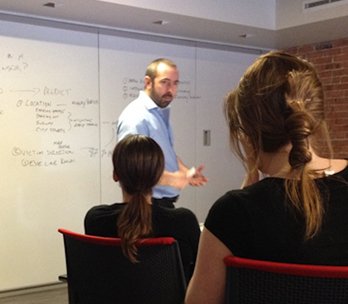
For over 25 years, Gershon Ben Keren has been providing corporate personal safety training to members of corporations and organizations, equipping them with the practical skills to identify, predict, prevent, and avoid violence in workplace and professional contexts.
Gershon Ben Keren's Qualifications for Corporate Training
- 30+ years security industry experience - Real-world application across diverse contexts
- Criminologist with two master's degrees - Psychology and Criminology/Criminal Psychology
- 5th Degree Black Belt in Krav Maga - Expert in Israeli self-defense and combat systems
- Published author - Three Amazon bestselling books on Krav Maga and self-defense
- Active researcher - Ongoing research in violence and violent offending
- Professional memberships - American Psychological Association (APA), American Society of Criminology (ASC)
- Museum of Israeli Martial Arts inductee - Recognized expert in Israeli combat systems (2010)
Customized Training for Organizations
Corporate safety training is customized to each organization's specific needs, industry requirements, and workforce characteristics. We recognize that different organizations face different threats and require tailored solutions rather than generic programs.
Training Development Process
- Initial consultation - Understanding your organization's specific concerns and requirements
- Risk assessment - Evaluating threats relevant to your industry and workforce
- Program design - Creating training addressing your specific needs and constraints
- Implementation - Delivering engaging, practical training for your employees
- Follow-up support - Ongoing consultation and refresher training as needed
Comprehensive Corporate Safety Training Programs
General Personal Safety and Self-Protection Training
Foundational training covering essential personal safety principles, situational awareness, threat recognition, and self-protection strategies applicable across diverse situations.
Personal Safety Training Includes
- Violence prediction and prevention strategies
- Situational awareness development
- Pre-violence indicator recognition
- Criminal behavior understanding
- Environmental threat assessment
- Risk management and mitigation
- Safe behavior modifications
- Emergency response protocols
Physical Self-Defense Training
Practical physical techniques based on authentic Israeli Krav Maga, designed for real-world violence situations with emphasis on simplicity, effectiveness, and legal appropriateness for civilian contexts.
Physical Training Components
- Defense against common attacks (grabs, holds, strikes)
- Armed threat defense (knife, gun, stick, improvised weapons)
- Multiple attacker scenarios
- Ground defense techniques
- Escape and evasion strategies
- Appropriate force levels for legal self-defense
- Stress response management
- Building muscle memory through repetition
Workplace-Specific Safety Training Programs
De-escalation and Conflict Resolution Training
For customer-facing employees or staff who interact with people within or outside your organization, we provide specialized training in de-escalation techniques and conflict resolution strategies.
De-escalation Training for Customer-Facing Employees
Employees who interact with customers, clients, patients, or the public face unique challenges requiring specialized communication and conflict management skills.
Who Benefits from De-escalation Training
- Retail employees - Managing difficult customers and preventing theft confrontations
- Healthcare workers - De-escalating agitated or aggressive patients and family members
- Customer service representatives - Handling angry or frustrated clients professionally
- Security personnel - Resolving conflicts without physical confrontation
- Social workers - Managing emotionally charged situations safely
- Education staff - Handling aggressive parents or students appropriately
- Hospitality workers - Managing intoxicated or difficult guests
De-escalation Skills Covered
- Recognizing escalation warning signs early
- Verbal de-escalation techniques and language
- Non-threatening body language and positioning
- Active listening and empathy statements
- Setting boundaries while maintaining respect
- Managing your own emotional responses
- Knowing when to disengage or seek help
- Post-incident protocols and documentation
Travel Security Training for Business Travelers
For employees who travel for work, we provide comprehensive travel security programs teaching how to stay safe while traveling while also keeping company assets—such as data and information—secure.
Travel Security Training Components
Personal Safety While Traveling
- Pre-travel research and planning - Understanding destination risks and threat levels
- Hotel security - Room selection, door security, emergency procedures
- Transportation safety - Taxi/rideshare security, public transit awareness, rental cars
- Street awareness - Navigating unfamiliar cities safely, avoiding dangerous areas
- Social engineering defense - Recognizing and resisting manipulation attempts
- Emergency protocols - What to do if things go wrong, embassy contacts, evacuation
Corporate Asset Protection
- Data security - Protecting sensitive information on devices and in cloud storage
- Device security - Laptop, phone, and tablet protection from theft and compromise
- Communication security - Safe use of WiFi, VPNs, encrypted communication
- Physical document security - Protecting printed materials and confidential documents
- Social media awareness - Avoiding oversharing that creates security vulnerabilities
- Reporting protocols - When and how to report security incidents or concerns
International Travel Specific Concerns
- Cultural awareness and sensitivity training
- Language barriers and communication strategies
- Legal system differences and rights abroad
- Political instability and civil unrest awareness
- Health and medical emergency preparedness
- Kidnapping and express kidnapping prevention
Hiring and Firing Security Consultation
Violence Prevention in Employment Processes
We assist organizations in developing hiring and firing policies that reduce violence risks throughout the employment lifecycle, from initial candidate screening through termination procedures.
Secure Hiring Process Development
In the hiring process, how "safe" a potential employee is often takes a back seat to whether they are able and competent to do the job. We help organizations balance competency assessment with violence risk evaluation.
Pre-Employment Violence Risk Assessment
- Background check procedures - What to look for beyond criminal history
- Interview question strategies - Identifying concerning behavioral patterns legally
- Reference check techniques - Asking questions that reveal violence indicators
- Red flag identification - Recognizing warning signs during hiring process
- Employment gap analysis - Understanding concerning patterns in work history
- Social media screening - Legal and effective use of public information
Identifying Potentially Aggressive or Dangerous Individuals
Training hiring managers and HR personnel to recognize behavioral indicators that may suggest potential for workplace violence:
- History of violence or aggressive behavior
- Inability to accept criticism or feedback
- Patterns of blaming others for problems
- Inappropriate emotional responses to questions
- Fascination with weapons or violence
- Concerning statements about past employers or coworkers
- Poor impulse control or anger management issues
Safe Termination Procedures
If you do have to let employees go, you want them to exit and leave the organization in a way that gives them few reasons to come back and/or exact revenge. We help develop termination protocols that minimize violence risk.
Termination Violence Prevention Strategies
- Pre-termination threat assessment - Evaluating employee's potential for violence before termination
- Termination meeting protocols - Where, when, and how to conduct termination safely
- Security presence decisions - When security should be present or nearby
- Dignity preservation - Conducting termination respectfully to reduce revenge motivation
- Exit procedures - Secure removal of access, escorting from premises, property return
- Post-termination monitoring - Watching for concerning behavior after termination
- Communication with remaining staff - Maintaining security without creating panic
Special Termination Circumstances
- Terminating employees with known violence history
- Handling terminations involving domestic violence situations
- Managing layoffs vs. individual terminations
- Dealing with employees making threats during notice period
- Coordinating with law enforcement when appropriate
Active Shooter Response Training
Unarmed Solutions to Active Shooter Situations
Our training services extend to providing unarmed solutions to active shooter situations, recognizing this as one of the most feared workplace emergencies while providing practical, effective response strategies.
Industry-Specific Active Shooter Training
We are sensitive to the fact that companies and organizations in different industries have specific needs, and our training always recognizes these differences. Dealing with an active shooter in a hospital/healthcare setting is somewhat different from dealing with one in an industrial complex, office building, school, or retail environment.
Healthcare Setting Active Shooter Response
Hospitals and healthcare facilities face unique challenges during active shooter events:
- Patient evacuation challenges - Moving or sheltering immobile patients
- Multiple building complexes - Large campuses with numerous buildings and entrances
- 24/7 public access - Difficulty securing buildings with constant visitor traffic
- Medical equipment considerations - Protecting or disconnecting life-support equipment
- Staff responsibilities - Balancing patient care with personal safety
- Lockdown procedures - Securing units while maintaining essential medical functions
Office Building Active Shooter Response
Office environments present different considerations:
- Escape route identification - Multiple stairwells, emergency exits, alternative routes
- Shelter-in-place options - Conference rooms, offices with locking doors
- Communication systems - Using intercoms, emergency notifications, personal devices
- Vertical building dynamics - Evacuation from multiple floors, stairwell safety
- Open office layouts - Limited hiding places in modern open-plan designs
Industrial and Manufacturing Active Shooter Response
Industrial settings require specialized considerations:
- Large open spaces - Warehouses, production floors with limited cover
- Machinery and equipment - Using industrial equipment for cover or barriers
- Hazardous materials - Preventing secondary disasters during evacuation
- Noise levels - Hearing alarms or gunshots over machinery noise
- Shift work considerations - Training all shifts, not just day workers
Run, Hide, Fight Protocol Training
We teach the standard Run, Hide, Fight protocol while providing context-specific application:
Run - Evacuation When Possible
- Recognizing when evacuation is safest option
- Identifying escape routes and assembly points
- Helping others evacuate without compromising safety
- What to do once outside the building
- Communicating with emergency responders
Hide - Sheltering When Escape Impossible
- Selecting best hiding locations
- Barricading doors and blocking entry
- Remaining silent and concealed
- Silencing phones and electronic devices
- Maintaining readiness to fight if discovered
Fight - Last Resort Defense
- Committing fully to aggressive counterattack
- Using improvised weapons (fire extinguishers, furniture, etc.)
- Coordinating group attacks when possible
- Targeting vulnerable areas to incapacitate threat
- Maintaining aggression until threat is neutralized
Post-Event Procedures
- Interacting safely with responding law enforcement
- Providing information about shooter and victims
- Evacuation procedures with police presence
- Psychological first aid and trauma support
- Organizational recovery and return to operations
Request Corporate Safety Training for Your Organization
Customized Training Development Process
If you would like to bring this type of professional personal safety and violence prevention training to your organization, we will work with you to understand your specific needs and develop appropriate training solutions.
Our Consultation Process
- Initial inquiry - Use the contact form to describe your organization's needs and concerns
- Consultation call - Discuss your specific requirements, workforce characteristics, and industry context
- Needs assessment - We help you identify which training programs best address your risks
- Program design - We develop customized training addressing your specific situation
- Implementation planning - We coordinate scheduling, logistics, and delivery format
- Training delivery - We provide engaging, practical instruction for your employees
- Follow-up support - We offer ongoing consultation and refresher training as needed
Not Sure What Training You Need?
If you are unsure about what exactly it is that you are looking for, we will be happy to work with you to identify and provide the appropriate training that your organization requires. Our consultation process helps you:
- Assess your organization's specific violence risks and vulnerabilities
- Identify which employees need which types of training
- Prioritize training initiatives based on greatest needs
- Develop comprehensive security culture rather than isolated programs
- Create sustainable safety practices that become part of organizational culture
Industries We Serve
We provide customized corporate safety training for organizations across diverse industries:
- Healthcare - Hospitals, clinics, mental health facilities, nursing homes
- Education - Universities, schools, educational institutions
- Retail - Stores, shopping centers, customer-facing businesses
- Hospitality - Hotels, restaurants, entertainment venues
- Financial services - Banks, investment firms, financial institutions
- Technology - Tech companies, data centers, research facilities
- Manufacturing - Industrial facilities, warehouses, production plants
- Professional services - Law firms, consulting companies, accounting firms
- Government - Municipal buildings, public services, government agencies
- Non-profit - Charitable organizations, social services, community centers
Contact Us About Your Training Requirements
Location: Krav Maga Yashir Boston, Woburn, Massachusetts
Service Area: Greater Boston, Massachusetts, and surrounding areas. National and international training programs available.
Use the contact form to make an inquiry concerning your training needs and requirements. We will respond promptly to discuss how we can help protect your organization and employees.
Summary: Comprehensive Corporate Safety Solutions
Why Organizations Choose Our Corporate Safety Training
- Expert instruction - 25+ years experience providing corporate training
- Research-based - Academic criminology expertise ensures evidence-based approaches
- Customized programs - Industry-specific training addressing your unique needs
- Practical application - Real-world skills employees can immediately apply
- Comprehensive approach - Prevention through response, not just physical techniques
- Legal appropriateness - Training designed for workplace and civilian contexts
- Proven methodology - Authentic Israeli Krav Maga combined with professional security experience
- Ongoing support - Consultation and refresher training available
Training Programs Available
- General personal safety and self-protection training
- Physical self-defense based on Israeli Krav Maga
- De-escalation and conflict resolution for customer-facing employees
- Travel security for business travelers
- Hiring and firing security consultation
- Active shooter response training (industry-specific)
- Workplace violence prevention
- Threat assessment and management
Protect Your Organization and Employees
Personal safety is essential to employee health, wellness, and productivity. Organizations that invest in comprehensive safety training demonstrate commitment to employee wellbeing while reducing liability risks and creating safer workplace cultures.
Contact us today to discuss how our corporate safety training can protect your organization and empower your employees.